Align Your Wealth with Enoughness

The Hour Before Dawn

The Hour Before Dawn 

A programme for wealth holders to explore if/how their ancestors have financially profited from the NS regime.

Are You Wrestling with the History Behind Your wealth?

  • Do you feel like there is nobody you can honestly talk to about your inheritance and the history behind it?

  • Have you wanted to look into your family's history for a long time — but never known where to start, or what to do with what you might find?

  • Do you hold progressive values — and struggle to reconcile them with what you know, or suspect, about your family's involvement in the National Socialist (NS) regime?

  • Are you sitting with an unease you can't quite name — a sense that your family's prosperity and the history of that era might not be entirely separate?

  • Are you searching for a community of people who share both your background and your values — not just wealth holders, but people committed to justice?

  • Are you longing to move through the guilt, shame, and loneliness connected to your family history — and turn those feelings into something concrete?

  • Are you afraid of what might happen — in your family, in your community — if you confront or even share the truth?

If these are your questions — even if you're not yet sure they apply to you — you are in the right place.

Why This Programme, and Why Now

The wealth that was consolidated through genocide, forced labor, and the dispossession of Jewish communities has largely stayed where it landed — passed down quietly through generations of families who never had to account for it.

Those who have inherited that wealth hold a unique and necessary role in today's fight against fascism. Yet few have had the space, support, or community to research their legacy, grieve what they find, and put their resources into meaningful action.

2026 is Germany's super election year — and the AfD, classified as a right-wing extremist organization by the country's own intelligence agency, is polling neck-and-neck with the governing CDU. Across Europe, far-right parties now hold more and more power, they even shape coalitions. The democratic firewalls built after 1945 are not holding.

Despite decades of Holocaust remembrance, the root causes of fascism remain unaddressed. At the same time, Germany's relationship to its Nazi past is being instrumentalized in ways that silence legitimate dissent and distort the meaning of antisemitism — making it harder, not easier, to confront the real thing. For people whose families might have profited during the Nazi regime, this creates a disorienting landscape: the history you are trying to reckon with is being invoked to justify new forms of repression, while actual repairs for past harms remain incomplete.

Whether your ancestors were active Nazis, reluctant participants, or business owners who "just" profited from the economic circumstances during the NS Regime and in the post-war era, the reverberations of this chapter of history continue to shape the present. Reckoning with one's history — its intersections with wealth, privilege, and cultural narratives — is an essential step toward uprooting fascism and working toward a more just future for all. Inheritors of wealth have a particular opportunity to explore how moving money in response to this history can support a kind of healing and repair not addressed by state-level reparations. For more details on if your family story is relevant, click on the Is Your Family History Relevant? below.

This Programme is for You if You:

  • Have at least one ancestor who lived and built family wealth in Germany, Austria, or a country that collaborated with the NS regime during the first half of the 20th century.

  • Know or suspect your family's wealth is in some way connected to the NS regime and/or German colonialism

  • Are concerned about the rise of fascism, and want to take action to protect democracy.

  • Feel called to explore your family's past — this can include unease, hesitation, or fear about what you might uncover, but you still want to do the work.

  • Have the emotional bandwidth to engage in this work alongside others. This programme involves group-based reflection, family research, and peer support.

  • Are a person with wealth or class privilege: you have an anticipated inheritance of at least €500,000 and/or present-day access to at least €100,000, or are a shareholder in a family company with ties to this history.

What You Will Gain From This Programme

A supportive and confidential learning container to honestly confront your family's connection to the NS regime (and/or German colonialism)

  • A library of diverse resources and a strong political framework for understanding the context of history and this present moment

  • A community of peers with shared values and experiences

  • Tools for researching the history of your family and your money

  • Tools, practice, and support for family conversations about your family history — including difficult ones — and strategies for organizing your family into your action steps

  • Tools for researching the history of your family's wealth and creating a philanthropic plan that centers repair for past harms and their current consequences

  • Action steps you can take to offer healing to your lineage and to those your family caused harm to

  • Practices and skills to navigate emotions from guilt, shame, and hiding toward grief, truth-telling, empowerment, and action

The Container

This programme came into being because there is no other space like it. Over the course of eight months, you will be accompanied by a small group of no more than fifteen peers who share your history and your questions — guided by facilitators who have spent years developing the tools, frameworks, and relationships to lead this work.

Our facilitation brings together trauma-informed and somatic methodologies, ancestral healing practices, over a decade of experience in wealth coaching and philanthropic planning, and deep expertise in historical research and archival work. These aren't separate tracks — they're woven together because the work itself demands it: building a giving plan requires confronting the emotions underneath, and moving through grief connects us to a concrete path forward.

"I gained important context on how my ancestors' choices created harm during the NS Regime and how I financially benefited from them. All of that has been instructive when thinking about how to resist fascism today." — Renée

Programme Schedule

Cycle One runs from November 2026 through June 2027. It's designed as an arc: you begin by grounding in community and confronting your family's history, move into the emotional and financial dimensions of that inheritance, and finish with concrete plans for reparative action and antifascist commitment.

The programme includes two immersive in-person retreats in Berlin, one in-person daylong, five virtual sessions (Sundays, 16:00-19:00 CET), monthly peer group meetings, and three individual coaching sessions.

Key Dates:

  • 6–9 November, 2026 — Opening Retreat (in-person, Berlin)

  • 13 December — Online Session One

  • 17 January, 2027 — Online Session Two

  • 20 February — In-Person Daylong (Berlin, with hybrid option)

  • 14 March — Online Session Three

  • 11 April — Online Session Four

  • 2 May — Online Session Five

  • 4-6 June — Closing Retreat (in-person, Berlin)

  • Optional ritual in Berlin on 10 May

Retreats Our retreats take place at a beautiful, spacious venue near Treptower Park in Berlin. Over three days, we combine lecture and discussion with embodied practices, ritual, and emotional support — creating the conditions for the kind of honesty and depth that can't happen on a screen. These are the anchoring moments of the programme: where trust is built, where breakthroughs happen, and where the group becomes a community.

Peer Groups We thoughtfully create peer groups based on identities, location, and intuition. Groups meet every three to four weeks throughout the programme, focused on whatever phase the group is in: research, money stories, giving plans, or antifascist action.

Individual Coaching Three one-on-one sessions (55 minutes each) are included in tuition. Sessions can cover your relationship with money, family organizing, reparative giving, commemoration, storytelling, media strategy, and trauma-informed support for whatever you encounter in your journey.

Resources and Support A growing library of books, articles, podcasts, and worksheets for continued learning — so the work between sessions has depth and direction. Plus referrals to a network of vetted German-speaking therapists and coaches.

Group size: No more than 15 participants.

Estimated time commitment: ~15 hours per month

Participants in The Hour Before Dawn will also have the opportunity to join a second level of this learning journey in 2027 (dates not yet finalized).

"I never imagined commemoration could take this form — so much more meaningful than a Denkmal. I am starting to see a clearer path for myself and trust my intuition in this. I am not alone, and I don't need to be alone in this." — Anonymous

Facilitation Team 

We are a cross-class facilitation team. Two of us are US-born Jews with ancestors killed in the Holocaust; both are also inheritors of wealth who have spent years reckoning with the ways we have materially benefited from racial capitalism, settler colonialism, and wealth inequality. And one of us is Austrian and working-class, aware that the antisemitism of her ancestors who "just went along" — like millions of others — made the Holocaust and WWII possible.

We come to this work from different positions: as descendants of those who were targeted, and as a descendant of those who looked away. Each of us has spent years reckoning with what that history demands of us — and has taken concrete steps toward repair. We have dedicated ourselves to the personal and collective work of discovering what becomes possible when descendants of those who caused harm and descendants of those who were harmed come together to strive for truth, justice, and repair.
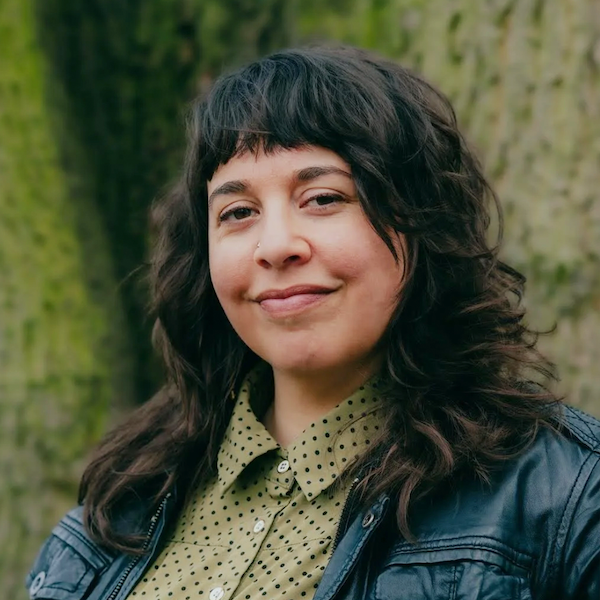
Iris Brilliant is a money coach for inheritors of wealth and has facilitated programs for wealth inheritors for over fifteen years. Iris is trained in Internal Family Systems and has a coaching certification from the Co-Active Training Institute. She inherited wealth at the age of 22 and has since redistributed 50% of it and lives off of her earned income. She learned how to develop transformational programs for people with wealth at Resource Generation, where she was the High Net Wealth Organizer and Family Philanthropy Organizer for five years. Iris is Jewish and is partnered to a German who has Nazi heritage, and thus this work is deeply personal to her. Her work has predominantly been focused on supporting Americans to grapple with the moral and logistical weight of inherited wealth built off of Black and Indigenous communities. She is passionate about supporting perpetrators of harm to reclaim their dignity through rigorous research and courageous action. Iris anchors her career in the longstanding Jewish values of Tikkun Olam (healing the world) and Teshuvah (return to wholeness through acts of repair). She believes that while we cannot change the actions of our ancestors, we as descendants are the only ones who can help heal our ancestors — and ensure the world learns from their mistakes. Iris is based in Berlin.
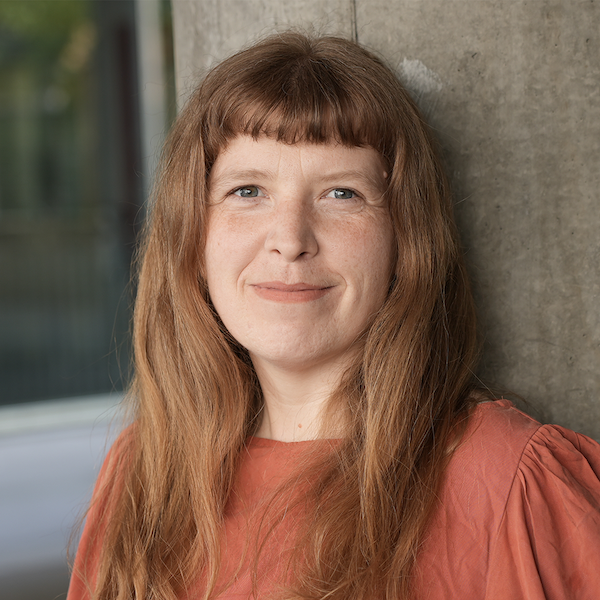
Teresa Distelberger is a documentary filmmaker and artist based in Vienna, Austria, working at the intersection of commemoration, dialogical art, and social sculpture. She studied Applied Linguistics, Film, and Gender Studies in Vienna, Paris, and Lancaster, and was part of a research project on Austrian identities led by discourse analyst Ruth Wodak — analyzing how perpetrator responsibility was discursively played down in official commemorational speeches during Austria's memorial year 2005. She holds a master's degree in Arts in Practice from the Dutch Art Institute, with a thesis on dialogical art and commemoration, and has completed the Collective Trauma Facilitation Training with Thomas Hübl.

In her site-specific commemoration projects, she works with local historians and the descendants of both victims and perpetrators of the NS regime. After co-directing The Future Is Better Than Its Reputation and directing Save the Village, she is currently working on a documentary about wealth inequality and redistribution.

Teresa comes to The Hour Before Dawn as an Austrian whose own family history is part of the story this programme addresses. Her grandparents were among the millions who went along — not party members, but carriers of the antisemitism that made the Holocaust possible. Her family history raises the questions at the heart of this programme: what does it mean to go along? And what does individual courage — even in small acts — make possible? One grandfather served in the Wehrmacht — while on the other side of the family, people in hiding were sheltered and fed. She brings to this work her commitment to forms of commemoration that move beyond the monument — toward something lived, relational, and accountable.
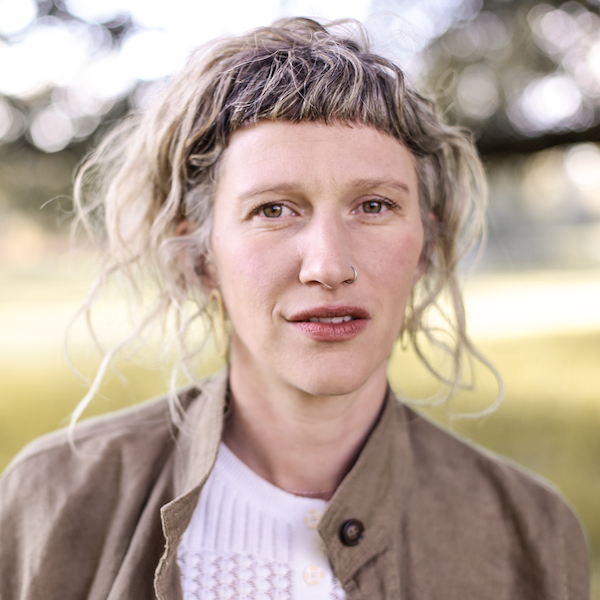
 

Justine Epstein is a facilitator and guide for people with inherited wealth. Justine works with clients one-on-one through The Mending Circle and co-facilitates the Ancestors & Money cohort — including as a course at Stanford University. She brings over eight years of experience holding transformative spaces for people to engage deeply with questions of legacy, identity, money, power and belonging. Her holistic approach brings together training from Weaving Earth Center for Relational Education, School of Lost Borders, and Ways of Council.

Justine is a sixth-generation descendant of James Gamble who co-founded multinational corporation Procter & Gamble in 1837. For five years, Justine has been organizing her family to interrupt P&G's harmful practices and take reparative action supporting communities directly impacted by the company's supply chain. Justine is also a member of Resource Generation, the Solidaire Network, and Transition Resource Circle — networks of people reimagining wealth and taking courageous action in these times.

Based in the US, Justine has spent significant time living, studying and working and building long-lasting cross-cultural relationships in Europe. Diving deep into family history has reconnected Justine with the many threads of her European lineage — including ancestors from Germany and Switzerland who immigrated in the 1800s, as well as her Jewish heritage from Lithuania, where her great-grandmother's family was targeted and killed by Einsatzkommando 3. She is honored to be following the stories of her ancestors back to their motherlands and engaging in the complex and necessary work of The Hour Before Dawn. She a senior mentor to The Hour Before Dawn, shaping the programme's curriculum, providing individual mentorship to participants, and supporting the programme from the US.
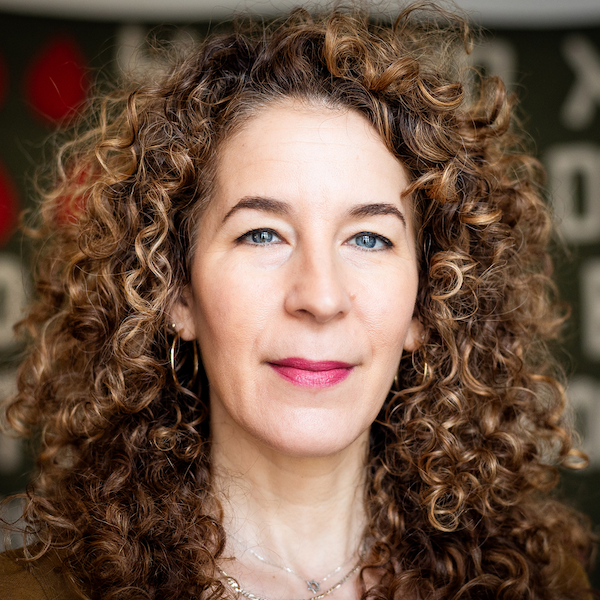
 

Julie Weitz is an artist, writer, and educator whose work integrates archival research, site-responsive performance, and experimental video to engage landscapes and communities marked by historical violence. A recent U.S. Fulbright Scholar in Poland, she has developed a methodology that collapses the sacred and the profane, using ritual, movement, and clowning to create participatory environments where audiences encounter the past as dynamic, relational, and unresolved.

Over the past decade, Weitz has explored cultural practices within her Ashkenazi inheritance that were fractured by genocide and later overshadowed by institutionalized and nationalistic forms of Jewish identity. Drawing on Yiddish performance traditions and her family’s theatrical history as first-generation Americans, she creates works that engage Jewish memory within the Eastern European landscapes from which these cultural forms—and her family—emerged.

Recent projects include Holy Names for Our Dybbuk (2024), presented at the POLIN Museum in Warsaw, and The Seven Beggars (2023) at the Galicia Jewish Museum in Kraków. Her work has been exhibited internationally at venues including the Contemporary Jewish Museum (San Francisco), ExtraCity Kunsthal (Antwerp), and the Jewish Museum (Amsterdam). She is a Helix Fellow at Yiddishkayt and a contributing writer for Momus and CARLA. View her artist's website: www.julieweitz.com

 

"My experience at the HBD program was very emotional, eye-opening, challenging and visionary. HBD has created a safe and honest environment, allowing you to dare to look closely and collectively move through emotions and reflections of shame, guilt, (self-)denial, discomfort, responsibility, confusion and imperfection. You managed to weave history, presence and future masterfully together — setting up a rhythm that was well integratable into our daily lives and didn't feel like pressure, instead made us truly become intrinsically motivated, invested and inspired as a group." — Caro

Topics We Cover

  • Family history research and archival methods

  • Navigating shame, guilt, and family silence

  • Forced labor, Aryanization, and war profits

  • How to talk to your family — and how to organize them

  • Your relationship with money and inherited wealth

  • Antisemitism: its history, its forms, and how it's instrumentalized today

  • The destruction of Jewish life in Europe and its lasting consequences

  • Collective and transgenerational trauma

  • Commemoration meets dialogical art and social sculpture

  • Reparative giving and philanthropic planning

  • Antifascist investing

  • The roots of fascism and the connection between colonialism and National Socialism

  • Fighting fascism today

"I am really impressed how the overall curriculum fit together — many initial topics immensely helped to understand later topics. There was a really good balance of getting contextual input, talking about action steps, and processing the connected emotions. I really appreciated finding community to tackle these difficult topics." — Simon

Is Your Family History Relevant?

Some people come to this programme because they already know about the ways their family history ties them to harm and inherited wealth. Others carry only a vague unease, an unanswered question, or a family story that has never been fully examined. This programme is for those who want support discovering the truth, regardless of what they end up finding.

The histories that bring people to this programme are varied and often complex. Below are the most common ways this history may be present in your family. If you're uncertain, we encourage you to reach out.

Family Businesses with Pre-Third Reich Roots

Many of our participants come from families whose businesses were established in Germany before 1933 and continued operating through the Nazi era. Whether or not your ancestors were ideologically aligned with the regime, businesses that operated during the Third Reich were embedded in a state economy built on racial exclusion, forced and slave labor, and wartime production. If your family business survived the Third Reich — in any sector — your family's story is relevant to this programme.

This applies equally to Austrian family businesses established before 1938, many of which have operated after 1945 under the long shadow of the "first victim" narrative that obscured widespread Austrian participation in and benefit from the Nazi regime.

Direct Participation in the Nazi Economy

This includes families whose businesses actively cooperated with the NS regime: manufacturing for the war effort, supplying the SS or Wehrmacht, using forced or concentration camp labor, and/or receiving state contracts tied to Nazi expansion. This category also includes families whose financial support helped bring the Nazi party to power before 1933.

Aryanized Property and Stolen Jewish Assets

One of the most widespread forms of Nazi-era wealth transfer happened at the level of individual homes, businesses, and assets. If your family owns or has inherited real estate, artwork, or other assets that were formerly owned by a Jewish family and acquired between 1933 and 1945 — whether your family purchased them then or inherited them decades later — they were likely acquired through Aryanization: the state-sponsored process of forcing Jewish families to sell at drastically reduced prices or face outright confiscation.

For some, the entry point into this history is a Stolperstein outside a family home. If there is a Stolperstein outside a home or building owned by you or your family, we encourage you to apply.

Post-War Beneficiaries of Nazi-Era Wealth

Many families in this category don't think of their wealth as having Nazi ties — and in one sense, they're right. The family story may be one of simple survival: keeping a business going, holding onto a home, getting through a difficult time under a regime they disagreed with.

But survival in the Nazi economy was not neutral. Businesses that continued to operate did so within a state that had eliminated Jewish competitors, used forced labor to suppress costs, and redirected enormous wealth from persecuted communities into "Aryan" hands. Even businesses that did not directly employ forced laborers operated in a market shaped by those who did — where costs were lowered, competition eliminated, and economic conditions distorted. Passive benefit from a system built on violence and dispossession does not require personal wrongdoing.

If your family company or wealth survived the Nazi era and grew in its aftermath, this programme invites you to sit with a deeper question: what does it mean to have benefited financially from genocide without having chosen it? This is not only a historical question. From stock portfolios to real estate markets, passive financial benefit from systems of violence and dispossession is woven into modern wealth. Understanding how your family navigated this — in one of history's most documented cases — is some of the most important preparation we have for resisting it today.

Ideological Legacy Without Direct Wealth Ties

Some families include ancestors who were committed Nazis — party members, SS officers, or true believers — whose ideological participation enabled the regime even if it didn't translate directly into inherited wealth. If you carry this history and have access to significant wealth today from other sources, including wealth built after 1945, you may find a home in this programme. The ideology your ancestors held enabled real harm, and the wealth you hold now gives you a powerful means to address it.

Inherited Knowledge, Inherited Profit

Some families carry a different kind of legacy: not land or seized assets, but patents, technical innovations, and intellectual property developed in service of the NS regime. If your ancestor held a position within the NS hierarchy that enabled them to advance technical or scientific developments — in weapons manufacturing, industrial production, chemical engineering, or other fields — and if your family has continued to benefit financially from those patents or innovations beyond the NS era, this programme is also for you. The wealth derived from such legacies may feel more abstract or distant, but the questions it raises about responsibility and repair are just as urgent.

Swiss Wealth

Switzerland's wartime neutrality has long obscured its deep financial entanglement with the Nazi regime. Swiss banks held looted Jewish assets, processed gold from concentration camps, and extended credit that helped sustain the German war economy. Swiss companies maintained profitable trade relationships with the Reich throughout the war. If your family wealth has roots in Swiss banking, industry, or real estate from this period, the history is less visible than in Germany or Austria — but no less present. This programme welcomes participants navigating that particular silence.

European Collaborators and Beyond

While this programme is rooted in the history of the NS regime, profiteering from persecution, war, and genocide during this era was not limited to Germany and Austria alone. If your family lived in a country that collaborated with or was allied to the NS regime — including France, the Netherlands, Belgium, Norway, Hungary, Romania, Croatia, Slovakia, or Bulgaria — and you suspect that your family's wealth grew through involvement in the NS era, whether through dispossession of Jewish communities, wartime industry, forced labor, or other forms of war profiteering, we welcome you to apply.

This is also relevant to families in occupied territories such as Poland, where, despite the brutality of occupation, some individuals and businesses profited from the circumstances of war and persecution. We also welcome descendants from Japan whose family wealth is directly tied to collaboration with the NS regime and the Second World War.

Wherever your family history is located, if you feel the weight of that legacy and are called to examine it honestly, you are welcome here.

German Colonial and Imperial Wealth

The Third Reich did not emerge in a vacuum. Germany's colonial era (roughly 1884–1919) laid ideological and economic groundwork that shaped the Nazis' genocidal tactics — including the use of concentration camps, racial science, and the dispossession of entire communities. These tactics were first systematically practiced not in Europe, but in what is now Namibia, where Germany carried out the genocide of the Herero and Nama peoples in the early twentieth century. That history laid ideological and methodological groundwork that Nazi architects of the Holocaust explicitly drew upon.

If your family's wealth or business has roots in the Wilhelmine era (1871–1918) and has remained in the family since then — or if your family company had colonial involvement in German-controlled territories across Africa (including present-day Tanzania, Rwanda, Burundi, Cameroon, and Togo), the Pacific (including German New Guinea, Samoa, and the Marshall, Mariana, and Caroline Islands), or in colonial concessions in China — you are part of this longer story.

The ideologies of colonialism and National Socialism are historically deeply intertwined. Because of this connection, we welcome descendants of those who profited from German colonialism. The Hour Before Dawn invites you to understand your inheritance within this broader arc.

A Note on Colonialism and This Programme

The ideologies of colonialism and National Socialism are historically deeply intertwined. Racism, dehumanization, and structural exploitation are central to both systems — and the Nazis explicitly built on methods that had been tested and refined in the German colonies. Because of this connection, we welcome descendants of those who profited from German colonialism.

We want to be transparent about what this programme can and cannot offer you in this regard. Our facilitator team is predominantly Jewish, and this programme holds a particular dynamic: it is a space where descendants of victims and perpetrators meet. Our primary focus is on the NS era and dismantling antisemitism. At the same time, this lens offers a powerful entry point into understanding broader patterns of racism, colonial violence, and structural injustice — and how they persist today.

We are not able to fully address the uprooting of white supremacy and anti-Black racism in the same depth within our curriculum. Participants from a colonial family background are encouraged to pursue additional learning alongside the programme, and we are happy to connect you with partner organisations and resources for this work. We hold this complexity together, and we are committed to deepening this dimension of the work in future cycles.

"It is the first time for me to be in a group with the combination of our social background, which we didn't choose, the interest in social justice, and the willingness to look at things that are uncomfortable in order to do something about them. It was what I was hoping for when I joined, but it felt a bit utopian at the time." — Anonymous

Pricing

Participation fees are based on a sliding scale tied to your wealth access, reflecting our commitment to making this programme available across economic differences. We are committed to making this programme accessible to those who have not yet inherited; we are also committed to compensating our Jewish, cross-class facilitation team at dignified rates.

Your contribution supports the programme's design, facilitation, curriculum development, guest speakers, travel for facilitators, and the costs of both in-person retreats including food. This programme was built from scratch without institutional funding — the facilitation team spends nine months preparing before the programme begins, developing original curriculum, keeping it politically current, and building the relationships and infrastructure that make this work possible.

The Hour Before Dawn combines original political education, facilitated archival research, emotional support, transformational work for wealth holders, and a peer community — led by a cross-class team with lived experience on both sides of this legacy. Our pricing reflects what it actually costs to deliver this depth of work sustainably.

Pricing Tiers:

  • Subsidized (€1.000–€2.500) for participants with limited wealth access or who have not yet inherited, and could not otherwise join. These spots are funded by higher-tier participants.

  • €3.000–€10.000 for participants with access to under €250.000. These spots are funded by higher-tier participants.

  • €10.000–€15.000 for participants with access to €250.000–€1M. This is our full cost range — the approximate per-person cost of delivering the programme.

  • €15.000–€20.000 for participants with access to €1M–€2M. This helps support our Subsizied tiers.

  • €20.000–€40.000 for participants with access to over €2M. Your contribution at this level is itself an early act of the redistribution practice that is central to this work.

During your initial call with one of the facilitators, we'll discuss which tier fits your situation. If you're unsure where you fit, we encourage you to apply regardless — we will find a contribution that aligns with both your resources and the sustainability of this programme.

All prices are listed excluding VAT (Umsatzsteuer). We will confirm the final amount including any applicable taxes during your discovery call.

Please note: personal transportation and lodging for the in-person retreats in Berlin is not covered in tuition. We accept one-time payments or monthly payments over a six-month period. Please note: personal transportation and lodging for the in-person retreats in Berlin is not covered in tuition. We accept one-time payments or monthly payments over a six-month period.

"I had a very thorough and intense experience. Although it remained a personal project, I felt guided and advised at every step of the way. The web of emotional and practical support was carefully chosen and executed — and it gave the whole enterprise a gravity that felt exactly right." — Constantin

How to Apply

We accept no more than 15 participants. Applications are open now.

Early applications received by July 1, 2026 receive priority placement. Applications close September 15, 2026, or when the cohort is full — whichever comes first. Applications are reviewed on a rolling basis, so we encourage you to apply early to secure your spot.

How it works: After you submit your application, we'll schedule a confidential discovery call with one of the facilitators. This is not a test — it's a conversation. We'll get to know each other, talk through your situation, and discuss which pricing tier fits. Applying does not commit you to the programme; the call is where we decide together whether it's the right fit.

A practical reason to apply early: German federal and regional archives typically take three to six months to process requests. Participants accepted by July will have time to receive initial findings before the programme begins in November. As soon as you are accepted, we send you guidance on how to start this process. One session of 1:1 support for archival research is included in your tuition.

To be considered for The Hour Before Dawn, you must submit an application. All application information and email exchanges will remain strictly confidential. You are welcome to send the form as a PDF if you prefer that over the online form. If you have any questions or concerns, please email us at thehourbeforedawn@googlegroups.com.

Not Sure If You Qualify?

You don't need certainty to apply. Uncovering the history — regardless of what you find — is part of the work. This programme is open to current wealth holders, shareholders in a family company, and future inheritors — what matters is that you have a meaningful stake in wealth connected to this history, and the desire to reckon with it.

If you need support understanding whether this programme is right for you, we invite you to schedule a conversation with a facilitator before applying.

Want to Learn More Before Applying?

We're hosting several opportunities to meet the facilitation team and experience this work before you apply:

Online Info Session — June 9, 2026, 7pm CET Open to anyone considering the programme. Meet the facilitation team, hear more about the programme structure, and ask questions. [Registration details coming soon.]

Family History Storytelling Dinner — May 8, 2026, 6:30–9pm, Berlin An evening of food and facilitated storytelling for those who carry perpetrator or profiteer history. This is a chance to meet two of the programme's facilitators, connect with alumni of previous cycles, and get a feel for the work before any commitment. This will be a confidential and compassionate space. Location is shared upon RSVP. Spots are limited — RSVP here.

Frequently Asked Questions

What language is the programme in? The programme is conducted in English. However, much of the archival research you'll do involves German-language documents and institutions. We provide guidance and support for navigating German archives regardless of your language level.

Can I join if I live outside Germany? Yes. Several of our online sessions and peer group meetings take place virtually, and we have had participants from across Europe. However, the two retreats and the daylong are held in person in Berlin, and attendance is an important part of the experience. Travel and accommodation in Berlin are not covered by tuition.

What if my family doesn't know I'm doing this? Many participants are in exactly this situation. All application information and communications are strictly confidential. The programme is designed to support you in navigating family dynamics at your own pace — including deciding if, when, and how to involve family members. You will never be pressured to disclose your participation to anyone.

What if I'm not sure my family history is relevant? You don't need certainty to apply. Many participants begin with only a vague sense that something in their family's past doesn't add up. Our [Is Your Family History Relevant?] section covers the most common ways this history shows up — and if you're still unsure, we welcome you to reach out or schedule a conversation with a facilitator.

Do I need to have started researching my family history already? No. Some participants arrive having done extensive research; others have never looked into it at all. The programme includes tools, guidance, and archival support to help you begin — or deepen — your research from wherever you are.

Is this therapy? No. While the programme is trauma-informed and includes emotional support, it is not a substitute for therapy. We provide referrals to a network of vetted German-speaking therapists and coaches, and we encourage participants to have therapeutic support alongside the programme if needed.

What happens after I apply? After you submit your application, we'll schedule a confidential discovery call with one of the facilitators. This is a conversation — not a test. We'll get to know each other, talk through your situation, and discuss pricing. Applying does not commit you to the programme.

How much time does the programme require? The average time commitment is roughly 15 hours per month, including sessions, peer group meetings, individual research, and reading. The in-person retreats (two weekends and one daylong) require additional time for travel.

Can't make these dates but wish you could? Fill out the short form below to be notified of when the next Hour Before Dawn program will happen. You will also be added to Iris’ newsletter, which typically goes out 1-3 times per year.


During World War II, Tempelhof Airport in Berlin was a significant site for military operations and as a stage for Nazi propaganda. Once a symbol of oppression and militarization, Tempelhofer Feld now is enjoyed as a free public space with gardens, cycling paths, and open fields for picnicking. Photograph by Adrien Olichon.